
Florida mortgage rates Instant rate quote.
No personal info needed.
Enter your numbers. See your estimated rate instantly.
Prefer a quick conversation? Call Shahram · (407) 906-6414
Straight answers. No application needed to talk.
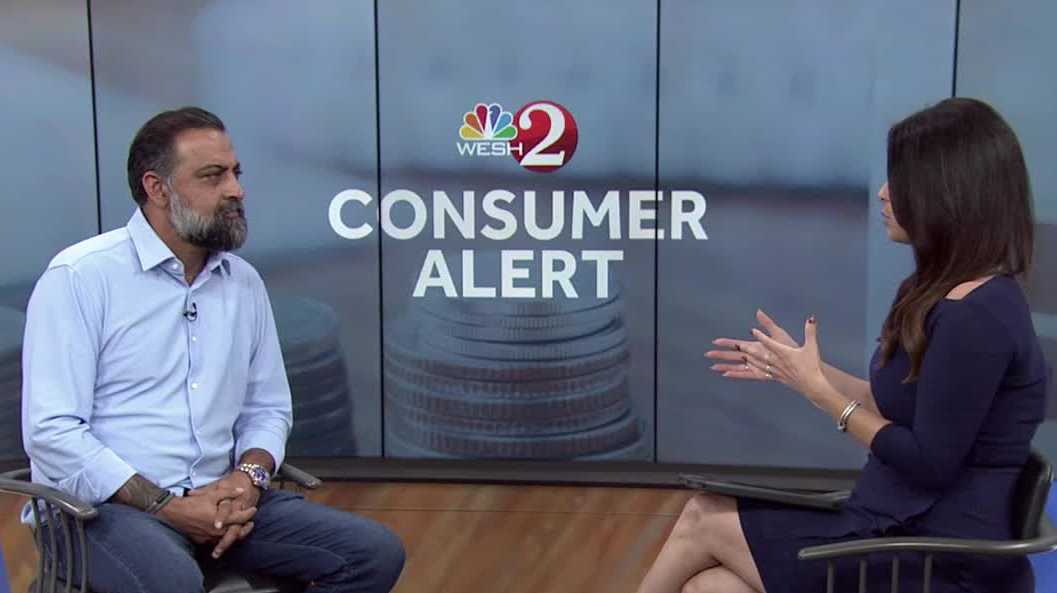 Shahram on WESH 2 NewsWatch the mortgage-rates interview ↗
Compare your two rate options
Conventional · 30-year fixed · 780–799 credit · $400,000 purchase · 25% down
· May change or be unavailable at commitment or closing · Not a rate lock.

A note from Shahram
Your numbers. Straight answers.
See the numbers before we talk.I show my pricing up front. If you like what you see, tell me about your loan or send me the best offer you’ve found.
Talk through the tradeoffs.Not sure which option makes sense? Call me. We can talk through your rate, payment, and closing costs together.
No application fee. No full application needed for a quick quote.Let’s start with a conversation.
Shahram Sondi · NMLS 186790Certified Mortgage Advisor™Originating mortgages since 2001
Reviews & recognition

Google rating and count update from Google Maps. BBB and Yelp ratings checked October 8, 2026.
Credit & pricing
Florida mortgage rates by credit score
The rate you see advertised may assume a different credit score from yours. These Conventional purchase examples keep the home price, down payment, property, loan term and lock period the same. Only the credit band changes.
| Credit score / scenario | Lower rate Up to 1 point | Upfront rate cost | Zero discount points | Lender credit |
|---|---|---|---|---|
| 680–699 credit score$400,000 purchase · 25% down30-year fixedPricing source effective | 7.375%Note rate7.559%APR | 0.99 discount points ($2,970 upfront rate cost) | 7.750%Note rate7.835%APR | 0 discount points + $1,050 lender credit |
25% down ($100,000) · 680–699 credit · 30-year fixed · 30-day lock. Approximately 360 monthly principal-and-interest payments: lower rate $2,072; zero discount points $2,149. This P&I amount excludes property taxes, homeowners insurance, HOA/CDD dues, flood insurance and other property-specific costs; your actual total monthly payment will be higher. Illustrative Florida estimates. Rates and pricing may change and may not be available at commitment or closing. Not a loan approval, commitment to lend, Loan Estimate or rate lock. View full assumptions and loan details for 680–699 credit score$400,000 purchase; 25% down ($100,000); $300,000 loan; 680–699 credit; primary residence occupancy; single-family; 30-year fixed; 30-day lock. Discount points are separate from other closing costs. A lender credit can offset eligible closing costs; zero discount points does not mean zero closing costs. Use the calculator above to explore your own scenario. | ||||
| 720–739 credit score$400,000 purchase · 25% down30-year fixedPricing source effective | 7.000%Note rate7.165%APR | 0.875 discount points ($2,625 upfront rate cost) | 7.625%Note rate7.709%APR | 0 discount points + $714 lender credit |
25% down ($100,000) · 720–739 credit · 30-year fixed · 30-day lock. Approximately 360 monthly principal-and-interest payments: lower rate $1,996; zero discount points $2,123. This P&I amount excludes property taxes, homeowners insurance, HOA/CDD dues, flood insurance and other property-specific costs; your actual total monthly payment will be higher. Illustrative Florida estimates. Rates and pricing may change and may not be available at commitment or closing. Not a loan approval, commitment to lend, Loan Estimate or rate lock. View full assumptions and loan details for 720–739 credit score$400,000 purchase; 25% down ($100,000); $300,000 loan; 720–739 credit; primary residence occupancy; single-family; 30-year fixed; 30-day lock. Discount points are separate from other closing costs. A lender credit can offset eligible closing costs; zero discount points does not mean zero closing costs. Use the calculator above to explore your own scenario. | ||||
| 780–799 credit score$400,000 purchase · 25% down30-year fixedPricing source effective | 6.875%Note rate7.013%APR | 0.625 discount points ($1,875 upfront rate cost) | 7.125%Note rate7.202%APR | 0 discount points + $1,125 lender credit |
25% down ($100,000) · 780–799 credit · 30-year fixed · 30-day lock. Approximately 360 monthly principal-and-interest payments: lower rate $1,971; zero discount points $2,021. This P&I amount excludes property taxes, homeowners insurance, HOA/CDD dues, flood insurance and other property-specific costs; your actual total monthly payment will be higher. Illustrative Florida estimates. Rates and pricing may change and may not be available at commitment or closing. Not a loan approval, commitment to lend, Loan Estimate or rate lock. View full assumptions and loan details for 780–799 credit score$400,000 purchase; 25% down ($100,000); $300,000 loan; 780–799 credit; primary residence occupancy; single-family; 30-year fixed; 30-day lock. Discount points are separate from other closing costs. A lender credit can offset eligible closing costs; zero discount points does not mean zero closing costs. Use the calculator above to explore your own scenario. | ||||
Reference examples, not statewide averages or your calculator results. The rate and the upfront cost can both change with your credit profile. Zero discount points does not mean zero closing costs.
These examples use the same pricing engine and selection rules as the calculator. They show selected options, not every available rate or product. A credit score alone does not determine eligibility or final terms.
Use your own numbers to compare the rate, APR, points, payment and estimated cash to close. No name, email, phone number or credit pull is required to use the calculator.
Compare your own credit rangeExplore the loan programs
Compare Florida mortgage rates by loan program
See the tradeoff between a lower rate with an upfront cost and zero discount points. These examples are not quotes for the same borrower. Use the calculator above to explore your own numbers without sharing contact information.
| Program / scenario | Lower rate Up to 1 point | Upfront rate cost | Zero discount points | Lender credit |
|---|---|---|---|---|
| Conventional$400,000 purchase · 25% down30-year fixedPricing source effective | 6.875%Note rate7.013%APR | 0.625 discount points ($1,875 upfront rate cost) | 7.125%Note rate7.202%APR | 0 discount points + $1,125 lender credit |
25% down ($100,000) · 780–799 credit · 30-year fixed · 30-day lock. Approximately 360 monthly principal-and-interest payments: lower rate $1,971; zero discount points $2,021. This P&I amount excludes property taxes, homeowners insurance, HOA/CDD dues, flood insurance and other property-specific costs; your actual total monthly payment will be higher. Illustrative Florida estimates. Rates and pricing may change and may not be available at commitment or closing. Not a loan approval, commitment to lend, Loan Estimate or rate lock. View full assumptions and loan details for Conventional$400,000 purchase; 25% down ($100,000); $300,000 loan; 780–799 credit; primary residence occupancy; single-family; 30-year fixed; 30-day lock. Discount points are separate from other closing costs. A lender credit can offset eligible closing costs; zero discount points does not mean zero closing costs. Use the calculator above to explore your own scenario. | ||||
| FHA$400,000 purchase · 3.5% down30-year fixedPricing source effective | 6.750%Note rate7.593%APR | 0.534 discount points ($2,097 upfront rate cost) | 6.875%Note rate7.663%APR | 0 discount points + $145 lender credit |
3.5% down ($14,000) · 780–799 credit · 30-year fixed · 30-day lock. $392,755 financed loan, including 1.75% upfront FHA mortgage insurance. Approximately 360 monthly principal-and-interest payments: lower rate $2,547; zero discount points $2,580. This P&I amount excludes property taxes, homeowners insurance, FHA monthly mortgage insurance, HOA/CDD dues, flood insurance and other property-specific costs; your actual total monthly payment will be higher. Illustrative Florida estimates. Rates and pricing may change and may not be available at commitment or closing. Not a loan approval, commitment to lend, Loan Estimate or rate lock. View full assumptions and loan details for FHA$400,000 purchase; 3.5% down ($14,000); $386,000 base loan; 780–799 credit; primary residence occupancy; single-family; 30-year fixed; 30-day lock. The upfront FHA mortgage-insurance premium is financed into the loan, so the rate, payment and APR are calculated on the total financed loan rather than the base loan. Monthly FHA mortgage insurance is assumed to continue for the life of the loan, which is the standard treatment at this loan-to-value; it is not assumed to cancel. Discount points are separate from other closing costs. A lender credit can offset eligible closing costs; zero discount points does not mean zero closing costs. Use the calculator above to explore your own scenario. | ||||
| VA$500,000 purchase · 0% down30-year fixedPricing source effective | 6.750%Note rate7.053%APR | 0.399 discount points ($1,995 upfront rate cost) | Not available | Not available |
0% down ($0) · 780–799 credit · 30-year fixed · 30-day lock. $510,750 financed loan, including 2.15% VA funding fee. VA example assumes first use, non-exempt borrower and less than 5% down. Approximately 360 monthly principal-and-interest payments: lower rate $3,313. This P&I amount excludes property taxes, homeowners insurance, HOA/CDD dues, flood insurance and other property-specific costs; your actual total monthly payment will be higher. Illustrative Florida estimates. Rates and pricing may change and may not be available at commitment or closing. Not a loan approval, commitment to lend, Loan Estimate or rate lock. View full assumptions and loan details for VA$500,000 purchase; 0% down ($0); $500,000 base loan; 780–799 credit; primary residence occupancy; single-family; 30-year fixed; 30-day lock. Assumes a first use of the VA benefit, a non-exempt borrower and less than 5% down (the combination the 2.15% funding fee applies to) and assumes the fee is financed into the loan. The funding fee varies with prior use of the benefit, down payment and exemption status, so a borrower outside those assumptions would see different figures. Discount points are separate from other closing costs. A lender credit can offset eligible closing costs; zero discount points does not mean zero closing costs. Use the calculator above to explore your own scenario. | ||||
These are reference examples, not statewide averages or quotes for the same borrower. Discount points are an upfront rate cost, separate from other closing costs. A lender credit can offset eligible closing costs; zero discount points does not mean zero closing costs.
More about each program and its assumptions
Conventional mortgage rates in Florida
As of , this illustrative Florida planning example for a $400,000 purchase with 25% down ($100,000), a $300,000 loan, 780–799 credit, primary-residence occupancy, a single-family property, a 30-year fixed term, and a 30-day lock shows two featured Conventional choices. The lower-rate option (up to 1 point) is a 6.875% note rate and 7.013% APR, with 0.625 discount points ($1,875 upfront rate cost) and about $1,971 per month in principal and interest. The zero-discount-point option is a 7.125% note rate and 7.202% APR, with 0 discount points + $1,125 lender credit and about $2,021 per month in principal and interest.
Lower rate · Up to 1 point: 30-year fixed · Approximately 360 monthly principal-and-interest payments of $1,971. Zero discount points: 30-year fixed · Approximately 360 monthly principal-and-interest payments of $2,021. This P&I amount excludes property taxes, homeowners insurance, HOA/CDD dues, flood insurance and other property-specific costs; your actual total monthly payment will be higher.
Illustrative Florida estimates. Rates and pricing may change and may not be available at commitment or closing. Not a loan approval, commitment to lend, Loan Estimate or rate lock.
FHA mortgage rates in Florida
As of , this illustrative Florida planning example for a $400,000 purchase with 3.5% down ($14,000), a $386,000 base loan, 780–799 credit, primary-residence occupancy, a single-family property, a 30-year fixed term, and a 30-day lock shows two featured FHA choices. The lower-rate option (up to 1 point) is a 6.750% note rate and 7.593% APR, with 0.534 discount points ($2,097 upfront rate cost) and about $2,547 per month in principal and interest. The zero-discount-point option is a 6.875% note rate and 7.663% APR, with 0 discount points + $145 lender credit and about $2,580 per month in principal and interest. The upfront FHA mortgage-insurance premium is financed into the loan, so the rate, payment and APR are calculated on the total financed loan rather than the base loan. Monthly FHA mortgage insurance is assumed to continue for the life of the loan, which is the standard treatment at this loan-to-value; it is not assumed to cancel.
Lower rate · Up to 1 point: 30-year fixed · Approximately 360 monthly principal-and-interest payments of $2,547. Zero discount points: 30-year fixed · Approximately 360 monthly principal-and-interest payments of $2,580. This P&I amount excludes property taxes, homeowners insurance, FHA monthly mortgage insurance, HOA/CDD dues, flood insurance and other property-specific costs; your actual total monthly payment will be higher.
Illustrative Florida estimates. Rates and pricing may change and may not be available at commitment or closing. Not a loan approval, commitment to lend, Loan Estimate or rate lock.
VA mortgage rates in Florida
As of , this illustrative Florida planning example for a $500,000 purchase with 0% down ($0), a $500,000 base loan, 780–799 credit, primary-residence occupancy, a single-family property, a 30-year fixed term, and a 30-day lock shows two featured VA choices. The lower-rate option (up to 1 point) is a 6.750% note rate and 7.053% APR, with 0.399 discount points ($1,995 upfront rate cost) and about $3,313 per month in principal and interest. A zero-discount-point VA quote is not shown for this scenario: its only zero-point option carries a lender credit, and how that credit affects the APR is not yet substantiated. The lower-rate VA option is shown and its figures are complete. VA financing remains available. Request a personalized quote. Assumes a first use of the VA benefit, a non-exempt borrower and less than 5% down (the combination the 2.15% funding fee applies to) and assumes the fee is financed into the loan. The funding fee varies with prior use of the benefit, down payment and exemption status, so a borrower outside those assumptions would see different figures.
Lower rate · Up to 1 point: 30-year fixed · Approximately 360 monthly principal-and-interest payments of $3,313. This P&I amount excludes property taxes, homeowners insurance, HOA/CDD dues, flood insurance and other property-specific costs; your actual total monthly payment will be higher.
Illustrative Florida estimates. Rates and pricing may change and may not be available at commitment or closing. Not a loan approval, commitment to lend, Loan Estimate or rate lock.
Where these numbers come from
These reference examples use the same imported lender pricing and calculations as the calculator above. Mortgage Expert is a Florida mortgage broker.
The lower-rate option is the lowest eligible rate in the imported pricing with an upfront rate cost of no more than 1 discount point. The zero-discount-point option uses an exact-zero row when available; otherwise, it uses the lowest eligible rate with a lender credit. The two choices may come from different lenders.
Each example states its purchase price, down payment, credit profile, loan term and lock period. These are reference scenarios, not statewide averages. Your pricing depends on your scenario, eligibility and the pricing available when you lock.
Calculate your own scenarioWhat’s moving the market
Florida Mortgage Rates Today: Market Update

Analysis by Shahram Sondi
Certified Mortgage Advisor™ · NMLS #186790
Florida mortgage shoppers still have some breathing room after this week’s sharp swings, but the market is giving back a little of its recent improvement this morning. Investors had moved money into bonds looking for safety, helping bring down the borrowing costs that influence mortgage rates. Today, some of that move is reversing. The good news is that those costs remain below where they were Wednesday morning. The catch is that inflation and overseas tensions haven’t gone away, so I wouldn’t assume the recent relief means rates will keep falling.
My take heading into the weekend: if you’re closing soon and today’s payment and estimated closing costs fit your budget, I’d lean toward locking and protecting the improvement. If your closing is farther out, there may be room to keep watching, as long as you’re comfortable with pricing getting worse. I’ll walk you through the available rate options and what you’d pay upfront for a lower rate. The goal is to make a decision that fits your budget and closing date, not gamble on catching the perfect market low.
In their words · Google reviews
What a buyer said about the rate and the guidance.
The rate
“best rate compared to other lenders we spoke with”
More tools for your mortgage decision
Keep comparing
Use the rate as a starting point.
The useful next step depends on whether you need a program comparison, a payment estimate, or help reading the cost of an offer.
A little more context
Mortgage rate questions.
Straight answers.
How often are these rates updated?
Pricing is normally reviewed and updated once each business day, Monday through Friday, around 12:00 p.m. Eastern Time. Rates shown on Saturday and Sunday use the most recently published Friday pricing because wholesale mortgage markets are closed on weekends. New Monday pricing is normally published around noon Eastern Time. Holidays, market conditions, lender availability, or operational timing can delay an update. The exact ‘Pricing checked’ timestamp on this page shows when the displayed pricing was last updated.
What is the difference between rate and APR?
The interest rate is the percentage cost of borrowing the principal and is what your monthly principal and interest is calculated from. APR is a broader annualized measure that combines the interest rate with certain loan charges, including points and some fees. APR can help compare borrowing cost, but it is not your monthly payment and it does not include every amount due at closing.
What are discount points?
Discount points are an upfront charge paid in exchange for a lower interest rate. One point equals 1% of the loan amount. A lender credit is the same mechanism in reverse: a higher rate that returns money toward closing costs. Both are shown on this page in points and in dollars.
Why do mortgage rates change?
The underlying wholesale pricing moves with the bond market, which reacts to inflation data, Federal Reserve policy expectations and investor demand for mortgage-backed securities. Those conditions move pricing for everyone. Your credit profile, loan-to-value, program, term, occupancy and loan amount are what move your rate relative to it.
Do I need an application to see my rate?
No. Everything on this page, including the scenario you enter yourself, is calculated in your browser from the answers you select. No application is started, no contact information is required and no credit is pulled to see an estimate.
Are these rates guaranteed?
No. They are estimates for the scenario described, calculated from imported wholesale pricing. They are not an approval, not a commitment to lend and not a rate lock. Your final terms depend on a complete application, verified information and the pricing available when you lock.
What affects my Florida mortgage rate?
Credit profile, down payment or equity, loan program and term, occupancy and property type, loan amount, and whether the rate carries discount points or a lender credit. In Florida, property taxes, homeowners and wind insurance and any flood requirement change the payment and the cash to close, though not the rate itself.
How does a rate lock work?
A rate lock holds a specified rate and pricing for a stated period, as long as the loan closes within that period and the facts supporting the lock do not materially change. Every scenario on this page is priced on a 30-day lock. Other lock periods are available and price differently, and extending a lock may cost money. Your Loan Estimate shows whether the rate is locked and when the lock expires.
· Illustrative Florida estimate, not a commitment to lend or a rate lock.
Calculated from the latest available imported wholesale pricing for Florida. Not a real-time market feed, not an approval, not a commitment to lend and not a rate lock. Estimates assume a single-family primary residence in Florida on a 30-day lock unless the scenario states otherwise.